








If you're diving into College Football 26's Dynasty mode, prepare to lose hours of your life managing one of the most addictive features in the game: recruiting. Since players typically leave your roster within four years, success depends on consistently bringing in the next wave of high school stars. The key to differentiating successful programs from unsuccessful rebuilds is mastering the recruitment system. This guide breaks down the fundamentals, key strategies, and hidden details that will help you dominate the recruiting trail.
Understanding the Basics of Recruiting
Recruiting in College Football 26 revolves around three core pillars:
1.Individual motivations: Every recruit has personal needs and deal breakers you'll need to uncover through conversations and actions.
2.Regional differences: The talent pool differs depending on the area, mirroring actual high school pipelines. Some areas will produce elite quarterbacks, others might churn out linemen or speedsters.
3.School resources: National powers can cast a wide net, while smaller programs have to be precise and selective.
Keeping these three ideas in mind ensures you don't waste time or hours chasing players who were never realistic fits for your program. For those looking to get a head start, you might even visit z2u and find cheap CFB 26 coins to boost your in-game recruiting resources early on.
Building Your Recruiting Board
Before your first game, you'll set up a recruiting board of 35 players. You also have 35 scholarships available per season. With thousands of prospects to filter through, smart prioritization is essential.
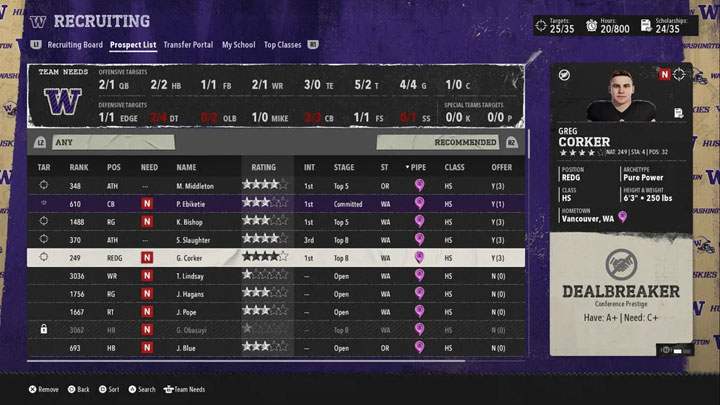
●Top priority: Five-star recruits with a pipeline rating of 5, especially in positions your roster needs most. These players are often quick to commit once you extend a scholarship.
●Next tiers:
◆Four-stars with a 5 pipeline rating
◆Five-stars with a 4 pipeline rating
◆Three-stars with a 5 pipeline rating
●Continue working down this ladder until your board feels balanced.
As the season goes on, refine your list by noting each recruit's three main motivations. Some of these are absolute deal breakers. If you only grade out as a C or B in a category that matters deeply to a recruit, they'll likely move elsewhere. In that case, drop them early and focus on better fits.
Managing Recruiting Hours
Once games begin, the real work starts: spending recruiting hours wisely. Each week, prospects cut down their list of schools—from open competition, to Top 8, Top 5, Top 3, and eventually a final decision. Your job is to remain above their cutoff line throughout the process.
The number of hours you have is based on program prestige:
●A five-star school begins with 1,000 hours
●A one-star school only has 350 hours
On top of that, you're capped at 50 hours per recruit per week, unless you unlock the Always Be Crootin' ability, which bumps the max to 70 hours at certain positions.
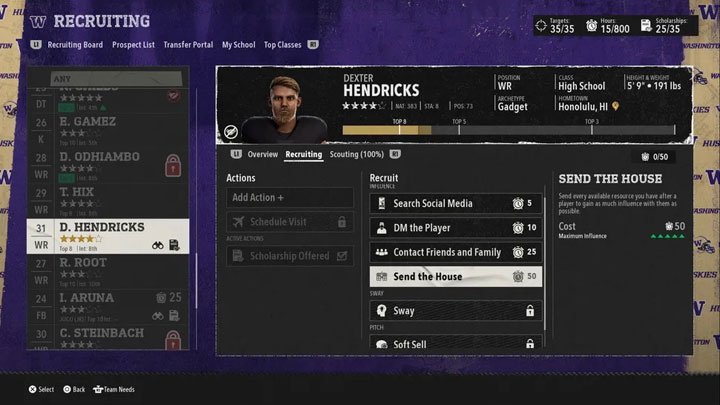
Here's how hours break down by activity:
●Scout: 10 hours (3–5 sessions for full scouting)
●Offer Scholarship: 5 hours
●Search Social Media: 5 hours
●Direct Message: 10 hours
●Contact Friends/Family: 25 hours
●Send The House: 50 hours
●Soft Sell: 20 hours (Top 5 only)
●Hard Sell: 40 hours (Top 5 only)
●Sway: 30 hours (Top 5 only)
●Schedule Visit: 40 hours (separate pool, doesn't count toward the 50 cap)
Think carefully before dropping 50 hours in one week—it's powerful but leaves fewer hours for your other targets.
School Grades and Their Importance
Each school has 14 grades that recruits care about. They represent how attractive your program looks on paper. Some are fixed, while others can improve (or decline) based on performance.

●Permanent: Academic Prestige, Campus Lifestyle
●Variable: Facilities, Brand Exposure, Championship Contender, Coach Prestige, Coach Stability, Conference Strength, Playing Style, Playing Time, NFL Potential, Program Tradition, Proximity to Home, Stadium Atmosphere
Your objective is to match your best grades with a prospect's priorities. If you're a rebuilding program, lean on categories like Playing Time or Proximity to Home. Elite schools can push tradition, exposure, or pro development. For additional support, you could buy CFB 26 coins from z2u.com to enhance your program's capabilities and gain more flexibility in recruiting.
Visits and Closing the Deal
The final stage of recruiting is the campus visit, which unlocks once a recruit is in their Top 5 and you've offered a scholarship. Each visit costs 40 hours (from a separate pool) and lets you host up to four recruits during home games or bye weeks.
Tips for maximizing visits:
●Match activities with your program's best attributes.
●Avoid scheduling direct competitors for the same position on the same weekend (two QBs visiting together rarely works).
●Pair recruits who might complement each other—like a quarterback and offensive tackle.
●Most importantly: win the game that weekend. A bad loss kills momentum.
After verbal commitments, the job isn't over. If a recruit's deal breaker was "Championship Contender," a losing streak could cause them to flip late. Protect your promises until signing day.
Final Thoughts
In College Football 26, recruiting is a never-ending game of chess. Balance your hours, target players who truly fit your program, and time visits strategically. Nail these elements, and you'll keep your roster stacked for years to come. Once your class is locked in, you can shift focus to playbooks, schemes, and chasing that national championship.









UNTERSTÜTZUNG
LEGAL






 USD ($)
 Deutsch
  Hilfe Center