


Crusader Kings III

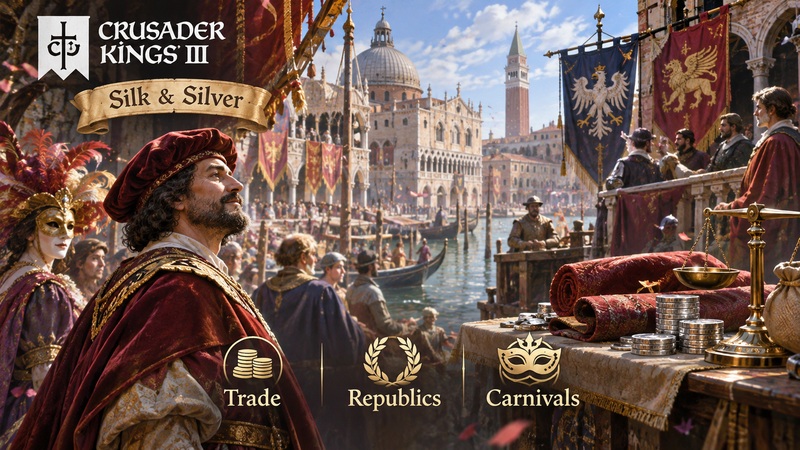
Paradox Interactive officially released Crusader Kings III: Silk & Silver on November 17, 2026, introducing a major expansion that changes how players build wealth, influence politics, and compete for power in medieval Europe. Instead of focusing entirely on dynastic marriages, territorial conquest, and feudal warfare, the new DLC introduces merchant families, playable republics, expanded trade mechanics, and new historical scenarios. For players interested in exploring different Crusader Kings III experiences, Z2U provides a marketplace to Buy Crusader Kings III Accounts, where they can browse available listings, compare seller offers, and find options that suit their preferences.
Crusader Kings III Silk & Silver Release Date and Price
Crusader Kings III: Silk & Silver officially launched on November 17, 2026, for PC.
The expansion is available separately and is also included in the Crusader Kings III Chapter V content bundle.
Here are the key release details:
| Information | Details |
|---|---|
| DLC Name | Crusader Kings III: Silk & Silver |
| Release Date | November 17, 2026 |
| Developer | Paradox Development Studio |
| Publisher | Paradox Interactive |
| DLC Type | Major Expansion |
| Price | $29.99 / €29.99 / £25.99 |
| Included In | Crusader Kings III: Chapter V |
| Free Update | Update 1.21 Florin |
Players must own the base game to access the expansion. Unlike previous expansions primarily focused on royal courts, dynastic relationships, or regional politics, Silk & Silver places economic power at the center of the experience.
New Merchant Gameplay: Build a Trading Empire Without Land
One of the biggest additions in Silk & Silver is the introduction of playable landless merchant families. Traditionally, Crusader Kings III revolves around controlling territory, maintaining noble relationships, and expanding dynastic influence. The new merchant gameplay introduces another path to success. Players can establish a trading company, develop commercial connections, and accumulate wealth without initially controlling a traditional feudal domain.
The new merchant mechanics include:
Trade Routes: Establish profitable trading connections between different markets.
Trading Companies: Develop commercial operations and expand economic influence.
Trade Experience: Gain experience through trading specific goods and unlock additional advantages.
Political Influence: Use wealth and connections to influence nobles and powerful rulers.
Exclusive Trading Rights: Secure privileges that allow greater control over specific goods.
Market Monopolies: Compete for commercial dominance and limit rival merchants.
Merchant Mansions: Upgrade a merchant family's headquarters to improve trading capabilities and unlock additional opportunities.
These features allow players to pursue economic dominance rather than relying exclusively on military conquest.
Three Merchant Specializations
Silk & Silver introduces three merchant specializations, each emphasizing a different approach to accumulating wealth.
Caravaneer
Caravaneers focus on transporting and trading goods. This specialization emphasizes commercial routes and large-scale trading operations.
Creditor
Creditors specialize in lending money to rulers. Instead of earning wealth exclusively through trade, they can use financial relationships to establish connections with powerful political figures.
Artisan
Artisans focus on crafting artifacts, offering an alternative commercial specialization centered on valuable creations. Each specialization provides distinct bonuses and gameplay opportunities. Together, these options give players more freedom to develop merchant families according to their preferred economic strategies.
Playable Republics: Venice and Genoa Enter the Spotlight
Another major feature of Silk & Silver is the introduction of playable republic governments. Players can now take control of influential patrician families in historical republics such as Venice and Genoa, competing for political authority through wealth, influence, and strategic relationships. Unlike hereditary monarchies, where succession often depends on dynastic inheritance, republic governments introduce political competition and elections.
Compete for the Position of Doge
In a republic, powerful families can compete for leadership and attempt to secure the position of Doge. Players must manage relationships with rival families while using their resources to increase political influence. Wealth, reputation, and political maneuvering become essential tools for obtaining power. This creates an alternative political experience where commercial success can directly support political ambitions.
New Republic Assembly and Laws
Silk & Silver also introduces an Assembly system that allows republics to establish and modify laws.
These laws can influence important political matters, including:
The length of a ruler's term.
How government treasury funds are managed.
The administrative direction of the republic.
However, proposed laws require Assembly approval, meaning political influence and cooperation remain important. Republics can also develop toward different administrative models, including maritime commercial powers, expansion-focused aristocratic republics, and city-states that place greater emphasis on citizens.
Trade Posts and Trade Leagues
Republics gain additional opportunities to expand their influence beyond their borders. Trade Posts allow republics to establish commercial positions in foreign counties, strengthening their presence in external markets. Trade Leagues enable cooperation between republics, providing commercial and military advantages. These systems connect economic development with diplomacy and international competition.
Over 40 Trade Goods and New Market Mechanics
Trade plays a central role in the Silk & Silver expansion. The new merchant gameplay revolves around more than 40 trade goods, providing additional opportunities to develop commercial networks and compete for market control. Goods such as silk, spices, and silver feature prominently in the expansion's historical trading scenarios.
Establish Profitable Trade Routes
Merchant families can search for profitable trading opportunities and establish routes connecting different markets. Successful trading operations can generate wealth, support the development of merchant headquarters, and increase a family's commercial influence.
Secure Exclusive Trading Rights
Players can use political connections to obtain exclusive rights to trade particular goods in specific markets. This encourages interaction with local rulers and powerful nobles, making political relationships valuable economic assets.
Pursue Market Monopolies
Beyond individual trading privileges, merchants can attempt to establish monopolies over entire markets. Such control can provide a competitive advantage over rival trading families. However, economic expansion also creates political challenges, as competitors may attempt to undermine a successful merchant's influence. The combination of trade, diplomacy, and political maneuvering makes economic competition a major part of the expansion.
Two New Historical Bookmarks
Silk & Silver introduces two historical bookmarks, offering different starting scenarios focused on commerce and political conflict.
1066: Channels of Commerce
The Channels of Commerce bookmark focuses on the commercial opportunities available to medieval merchants. Players can begin their journey as prominent trading figures and explore markets connected by valuable commodities such as spices, silk, and silver. This scenario is particularly suitable for players interested in building wealth through commercial activity.
1178: Guelphs & Ghibellines
The second bookmark explores the historical conflict between the Guelphs and Ghibellines in northern Italy. These political factions were closely associated with competing papal and imperial interests. Players can participate in regional political struggles, navigate competing alliances, and potentially become involved in larger military conflicts. The bookmark adds historical depth to the expansion's focus on Italian republics and political competition.
New Italian Political Events and Civic Carnivals
Beyond the major government and trade mechanics, Silk & Silver introduces additional historical content connected to medieval Italy. The Guelph and Ghibelline political conflicts provide opportunities for factional competition, political maneuvering, and warfare. Players can also participate in Civic Carnivals, special celebrations associated with republican cities. These additions help distinguish republic gameplay from traditional feudal campaigns by emphasizing urban culture, political rivalry, and commercial prosperity.
Crusader Kings III Update 1.21 Florin: What's Free?
Alongside Silk & Silver, Paradox Interactive released Update 1.21 Florin on November 17, 2026. Importantly, this update is available to all owners of the base game, regardless of whether they purchase the expansion. The free update introduces several significant economic changes.
Major Economic System Overhaul
The Florin update reworks important aspects of the game's economic mechanics, expanding the role of trade goods, buildings, and infrastructure.
Key additions include:
Trade Goods: Introduces trade goods into the base game's economy.
Building Needs: Adds requirements that connect buildings more closely with economic systems.
Roads: Introduces road mechanics as part of the broader economic overhaul.
New Building System: Reworks building mechanics and their relationship with economic development.
These changes are designed to make economic management a more substantial part of the overall Crusader Kings III experience.
Silk & Silver DLC vs. Free Update 1.21
Although both releases arrived on the same day, their content should not be confused. The paid Silk & Silver expansion primarily focuses on merchant families, republic governments, specialized commercial gameplay, and additional historical scenarios. Update 1.21 Florin introduces broader economic changes to the base game, including trade goods, roads, and revised building mechanics. Players therefore do not need to purchase Silk & Silver to experience the free economic overhaul. However, the expansion is required to access its dedicated merchant and republic gameplay features.
Is Crusader Kings III Silk & Silver Worth Buying?
Silk & Silver introduces a substantial alternative to the traditional feudal experience. Players who enjoy economic management, political strategy, and long-term commercial development may find the new merchant and republic systems particularly appealing.
The expansion is especially relevant for those who want to:
Build a wealthy merchant family without initially controlling land.
Establish trade routes and compete for market dominance.
Experience political elections and rivalries within republics.
Lead historical republics such as Venice and Genoa.
Explore medieval Italian political conflicts.
-
Use financial power and diplomacy as alternatives to direct military expansion.
However, players primarily interested in traditional feudal warfare and dynastic conquest may find that the free Florin update already provides meaningful economic changes without requiring the paid DLC. Because the expansion has only just launched, its long-term balance, performance, and overall reception will become clearer as more players spend time with the new systems.
Final Thoughts
With the expansion now available, players can explore a world where controlling markets and influencing governments may be just as important as commanding armies. Whether you prefer building a powerful merchant dynasty, competing for leadership in a republic, or exploring new historical scenarios, Silk & Silver offers fresh opportunities to shape your medieval legacy. For players looking for alternative account options, Z2U offers a convenient marketplace to find Cheap Crusader Kings III Accounts, compare prices from different sellers, and choose suitable offers based on their gaming needs and budget.









SUPPORT
LEGAL
Policies


 USD ($)
 English
 Help Center