


Girls' Frontline 2: Exilium


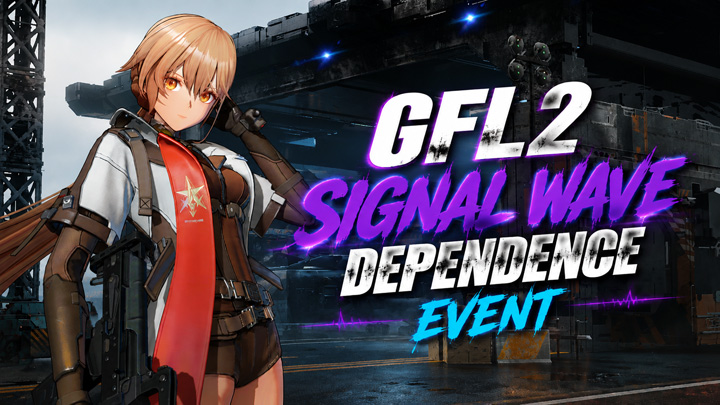
In June 2026, Girls' Frontline 2: Exilium introduced a major limited-time event titled “Signal Wave Dependence”, which represents one of the more structurally complete updates in the game's recent live-service cycle. Unlike minor patches or balance adjustments, this event integrates multiple gameplay systems, including narrative progression, resource farming, challenge-based combat, and a limited recruitment banner.
Running from June 4 to June 24, 2026, with reward redemption available until July 1, the event follows the typical two-and-a-half-week format commonly used in modern gacha RPGs. This duration is carefully designed to balance player engagement without causing fatigue, while still generating urgency through time-limited rewards.
Narrative Context and Thematic Depth
The event centers around the T-Doll Bessie, who plays a central role in the storyline. The narrative explores psychological instability, communication distortion, and dependency on signal-based information flow within a technologically degraded battlefield environment.
Compared to standard mission arcs, this event places greater emphasis on character introspection rather than external combat escalation. Bessie's interactions with the Commander highlight emotional fragmentation and unreliable perception, which aligns with the broader thematic identity of Girls' Frontline 2, where artificial intelligence and human command structures are increasingly blurred.
This narrative direction is not just cosmetic storytelling—it directly influences how players perceive the featured banner unit, increasing emotional attachment and, indirectly, engagement with the recruitment system.
Gameplay Structure: Stage Progression and Efficiency Layering
The “Signal Wave Dependence” event adopts a multi-layered stage system, which can be divided into three primary gameplay components:
Story Stages – linear progression unlocking narrative segments
Standard Combat Missions – repeatable farming stages for currency
High-Difficulty Challenge Nodes – optional optimization-based content
Unlike earlier simplistic event formats, this structure introduces a resource efficiency gradient, meaning not all stages provide equal reward output per stamina cost. Players who optimize their farming routes can significantly increase their event currency gain over casual play.
Additionally, the event shop encourages strategic resource allocation. Since certain materials are limited in regular gameplay, many players prioritize farming those items first before converting remaining currency into secondary rewards.
Reward System Breakdown and Value Hierarchy
The reward structure is one of the most important aspects of the event, especially for progression-focused players. Rewards are divided into three tiers based on their long-term value in account development.
| Tier | Reward Type | Function | Player Value |
|---|---|---|---|
| Tier 1 | Recruitment Resources (e.g., Interview Permits) | Used for character banner pulls | Very High |
| Tier 2 | Upgrade Materials (e.g., Calibration Chips) | Used for weapon/unit enhancement | High |
| Tier 3 | Event Currency Exchange Items | Miscellaneous enhancement resources | Medium |
This hierarchy shows a clear design intention: encourage active participation in order to secure recruitment resources first, followed by long-term progression materials.
A key design insight is that Tier 1 resources are intentionally limited, pushing players toward either full event participation or selective prioritization.
Limited Banner Strategy and Meta Impact
The event also introduces a limited-time recruitment banner, featuring increased drop rates for:
Bessie (featured unit)
Rita
Koshennia
Exclusive weapon: Requiem of Judgment
From a gameplay perspective, these units serve different strategic roles. Bessie is positioned as the narrative anchor and likely functions as a flexible combat unit, while Rita and Koshennia provide situational utility depending on team composition.
For some players who are interested in quickly experiencing high-tier content or missing limited characters, external progression options sometimes become part of the discussion, such as buy Girls' Frontline 2: Exilium account from trusted platform like Z2U, especially during time-limited banner cycles.
The banner design follows a classic gacha monetization strategy:
High-value unit tied to event story
Short availability window
Increased probability to encourage spending decisions
This structure creates what is often called a “decision pressure window”, where players must evaluate whether to invest resources immediately or risk missing a potentially meta-relevant unit.
Cosmetics and Player Retention Mechanics
A notable addition is the exclusive skin “Soda Pop” for Bessie. While cosmetics do not impact gameplay balance, they play a crucial role in player retention systems.
Cosmetics serve three main functions:
Reinforcing character identity within the event narrative
Providing long-term personalization options
Increasing perceived value of featured characters
In combination with the storyline, skins help deepen emotional engagement, which indirectly supports banner participation rates.
Conclusion: Event Design Philosophy
The “Signal Wave Dependence” event demonstrates a well-integrated live-service design philosophy. It combines narrative immersion, structured gameplay loops, and monetization systems into a single cohesive update.
Rather than functioning as isolated content, each system reinforces the others:
Narrative increases character attachment
Character attachment increases banner engagement
Banner engagement supports long-term monetization
Gameplay loops sustain daily retention
While structurally similar to other gacha events, its strength lies in how tightly its narrative and mechanical systems are interconnected, making it more than just a temporary content drop.
For players, the event offers a clear choice: engage casually for basic rewards, or optimize participation to fully extract value from the limited-time systems. Either way, it represents a significant and well-constructed update within the 2026 content roadmap of Girls' Frontline 2: Exilium.
In broader player communities, some also explore alternative progression paths or account-based approaches, including options like cheap GFL2 accounts for sale at Z2U.com, particularly when returning after a break or aiming to catch up with current event content.









SUPPORT
LEGAL
Policies






 USD ($)
 English
  Help Center