


Limbus Company


The Mirror Dungeon in Limbus Company is one of the most replayable modes in the game, blending roguelike mechanics with branching decisions and unpredictable outcomes. Whether you are farming rewards or testing different team builds, understanding how answers and choices influence each run is crucial. Some players even consider Buy Limbus Company Account options to skip the early grind and access optimized setups more quickly, but learning and mastering the system on your own provides a much more satisfying experience.
What is Mirror Dungeon?
Mirror Dungeon is a procedurally generated game mode where players progress through a series of rooms, each containing combat encounters, shops, or event nodes. Each run is different due to its random structure and event variations.
You select a team of Sinners at the start.
Navigate branching paths with different room types.
Encounter random events with multiple choices.
-
Finish with a boss fight for rewards.
The mode also offers Normal and Hard difficulty, with rewards tied to completion and weekly bonuses.
How Answers and Choices Work?
Mirror Dungeon events often present players with multiple choices, each leading to different outcomes. These are not always deterministic—some include stat checks or random variations, meaning the same choice may lead to different results in different runs.
Key mechanics behind choices:
Affinity Checks: Certain options require specific Sin affinities (e.g., Wrath, Gloom)
Sanity (SP) Influence: Higher team sanity increases success rates
-
Risk vs Reward: Safer options give small bonuses, risky ones offer powerful E.G.O Gifts
Example Event Choices and Outcomes
Below is a simplified table based on real in-game event mechanics:
| Event | Choice | Requirement | Outcome |
|---|---|---|---|
| Hurting Teddy Bear | Listen closer | Sanity ≥ 0 | Heal HP & SP |
| Hurting Teddy Bear | Listen closer | Sanity < 0 | Allies staggered |
| Rose Hunter | Tell the truth | Wrath/Envy check | Gain E.G.O Gift |
| Rose Hunter | Tell the truth | Fail check | Take HP & SP damage |
| Heavenly Throne | I command death | Sloth/Envy check | Heal all allies |
| Heavenly Throne | I command death | Fail check | Heavy team damage |
These examples show how outcomes can vary based on stats and checks, reinforcing the importance of team composition and preparation.
Types of Answers in Mirror Dungeon
Mirror Dungeon choices generally fall into several categories:
1. Safe Choices
Minimal risk
Small healing or resource gain
-
deal for stabilizing weak runs
2. Gamble Choices
Require checks (affinity or sanity)
High reward (E.G.O Gifts, buffs)
-
Risk of heavy penalties
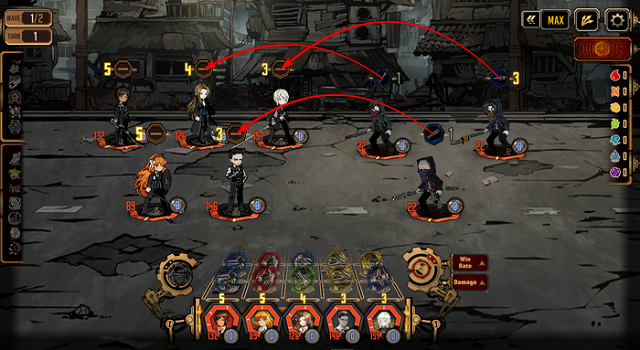
3. Combat Choices
Trigger battles instead of events
Often give guaranteed rewards
-
Useful when your team is strong
Tips to Maximize Outcomes
To consistently get the best results from your answers:
Build around affinities: Match your team with event requirements
Maintain high sanity: Many checks depend on SP levels
Prioritize E.G.O Gifts: These scale your power dramatically
Adapt to randomness: Not all outcomes are predictable
Mirror Dungeon is designed to be replayable, meaning no “perfect answer list” exists. Instead, success comes from adapting to each run’s variables.
Why Multiple Answers Matter?
Unlike linear game modes, Mirror Dungeon thrives on variability. The same event may produce different outcomes even with identical choices due to hidden factors or RNG.
This design encourages:
Experimentation
Replayability
Strategic decision-making
It also explains why many guides list multiple answer versions rather than a single “correct” path.
Mirror Dungeon is more than just combat. It is a system built on layered decisions where every choice directly influences the direction of your run. By understanding how options, checks, and outcomes work together, you can greatly improve your consistency and overall rewards. While some players look for shortcuts such as Cheap Limbus CompanyTop Up the true depth of the game comes from learning these mechanics yourself and adapting to each unpredictable dungeon.









SUPPORT
LEGAL
Policies






 USD ($)
 English
  Help Center