


Valor Mortis

Valor Mortis is a first-person Soulslike action RPG developed by One More Level, the studio behind Ghostrunner. Released on October 13, 2026, the game takes players into a twisted version of the Napoleonic era, where soldiers, supernatural creatures, and a mysterious plague have transformed familiar battlefields into deadly environments. Players control William Dowsett, a soldier who must survive dangerous encounters while uncovering the secrets behind the Crimson Plague. Players interested in getting started can also explore Cheap Valor Mortis Account offers on Z2U, where they can compare prices and listings from different sellers. Unlike traditional third-person Soulslike games, Valor Mortis combines first-person sword combat, firearms, supernatural abilities, and exploration. Learning how these systems interact is essential for surviving difficult encounters. This beginner guide covers combat fundamentals, weapon choices, recommended early skills, Amber upgrades, resource management, exploration strategies, and common mistakes to avoid.
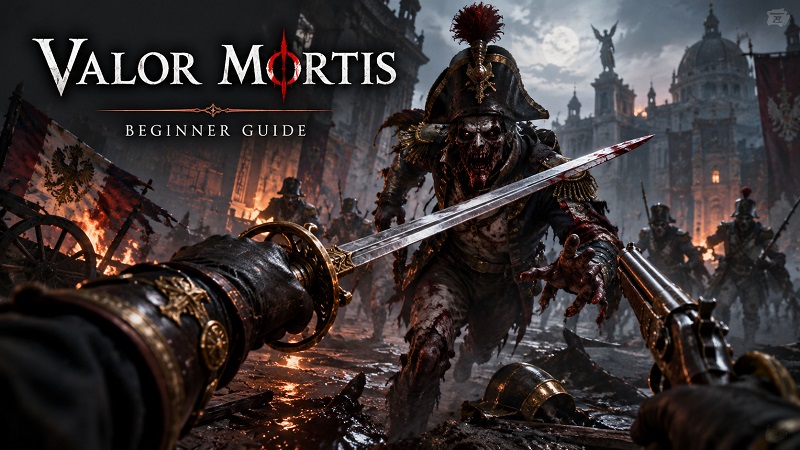
Understand the Core Combat System in Valor Mortis
Combat in Valor Mortis rewards patience, timing, and careful stamina management. Charging into every encounter and repeatedly attacking is rarely the safest approach. Instead, players should learn to read enemy movements and identify opportunities to counterattack.
Learn How to Parry and Break Enemy Posture
Enemies have a Posture meter that can be weakened through attacks and successful parries. Breaking their Posture creates an opportunity to unleash powerful attacks or finishers.
A reliable beginner combat routine involves:
· Observe enemy movements: Wait for an enemy to reveal its attack pattern before committing to a combination.
· · Use controlled attacks: Land one or two hits rather than exhausting your stamina with repeated swings.
· · Parry predictable attacks: Time your defensive action to disrupt the enemy and damage its Posture.
· · Exploit Posture breaks: Follow up with a heavy attack or finisher when the enemy becomes vulnerable.
· · Reset your position: Prepare for the next attack instead of immediately starting another long combination.
One important limitation is that attack animations cannot simply be canceled into a parry. Players who attack recklessly may find themselves unable to defend when an enemy strikes.
Block, Counterattack, and Perfect Dodge
Blocking provides another defensive option, especially when an enemy's timing is unfamiliar.A distinctive mechanic allows players to recover health lost while blocking by counterattacking immediately afterward. This makes defensive play more rewarding than simply holding a block.Perfect dodges also provide an advantage by briefly slowing time, creating an opening for repositioning or retaliation.
| Combat Mechanic | Main Function | Recommended Beginner Use |
|---|---|---|
| Parry | Interrupts attacks and damages enemy Posture | Use against predictable melee attacks |
| Block | Provides protection against incoming attacks | Learn unfamiliar enemy attack patterns |
| Block Counterattack | Restores health lost through blocking | Counter immediately after defending |
| Perfect Dodge | Triggers a brief slow-motion effect | Escape dangerous attacks and reposition |
| Posture Break | Opens enemies to powerful follow-up attacks | Focus on controlled aggression |
| Finisher | Delivers a powerful attack under the appropriate conditions | Capitalize on vulnerable enemies |
Beginner tip: Practice defensive timing against weaker enemies before attempting difficult bosses. Consistent parries and counterattacks can be more valuable than aggressive combinations.
Choose the Right Weapon for Your Playstyle
Melee weapons are central to combat, but different weapons encourage different defensive approaches.
Saber: A Defensive Starting Option
The Saber works well for players who prefer blocking and counterattacking. Skills that improve blocking efficiency can support this approach, particularly during longer encounters.
Recommended habits include:
Block unfamiliar attacks before attempting risky parries.
Counterattack quickly to recover recoverable health.
Avoid spending all available stamina on offensive combinations.
Prioritize defensive upgrades while learning enemy patterns.
Rapier: A Parry-Focused Alternative
The Rapier is better suited to players who enjoy timing-based combat. Combining it with upgrades that increase parrying impact can help weaken enemy Posture more efficiently.This approach rewards accurate timing, but it may be less forgiving for beginners who struggle to recognize attack animations.Neither weapon is automatically superior. The better choice depends on whether a player prefers reliable defensive responses or more demanding parry-focused combat.
Use Firearms Strategically Instead of Wasting Ammunition
Firearms add a ranged component to Valor Mortis, but ammunition should be treated as a limited resource.Some enemies have glowing weak points called Lambent Blisters. Shooting these targets can provide combat advantages and replenish Nephtoglobin, the resource associated with supernatural abilities.Environmental objects also matter. Certain enemies carry explosive barrels that can be detonated with gunfire, allowing players to damage nearby threats without committing to direct melee combat.
Follow these practical firearm guidelines:
Prioritize glowing weak points whenever a clear shot is available.
Look for explosive barrels before entering crowded encounters.
Use melee attacks against manageable enemies to conserve ammunition.
Save shots for dangerous targets or situations where ranged attacks offer a clear advantage.
Check enemy drops after combat, since ammunition can be recovered from defeated enemies.
Firearms should complement sword combat rather than replace it. A balanced approach helps maintain enough ammunition for challenging encounters.
Best Early Skills to Unlock in Valor Mortis
Character progression allows players to improve stamina, weapon damage, and defensive efficiency. For beginners, upgrades that increase survivability are generally more useful than highly specialized abilities.GamesRadar's early skill recommendations emphasize endurance, blocking or parrying improvements, and melee damage.
| Skill | Skill Tree Rank | Main Benefit | Recommended Priority |
|---|---|---|---|
| Maximum Endurance | Rank 1 | Increases maximum stamina | Very High |
| Blocking Impact | Rank 2 | Supports a blocking-focused playstyle | High for Saber users |
| Parrying Impact | Rank 2 | Improves the effectiveness of parries against enemy Posture | High for Rapier users |
| Melee Damage | Rank 3 | Increases melee damage | High |
| Melee Endurance Cost | Rank 5 | Reduces stamina consumed by melee attacks | High when available |
Recommended Early Upgrade Order
Step 1: Improve Maximum Endurance. Additional stamina gives players more flexibility to attack, defend, and reposition. GamesRadar recommends investing several early skill points into this upgrade.
Step 2: Strengthen Your Preferred Defense. Saber users can prioritize blocking-related improvements, while Rapier users may benefit more from Parrying Impact.
Step 3: Increase Melee Damage. Once basic survival becomes manageable, improving damage helps shorten encounters.
Step 4: Reduce Attack Stamina Costs. As more skills become available, lowering the stamina cost of melee attacks supports longer and more efficient combinations.
Players should adapt this order to their preferred weapons rather than treating it as a mandatory build.
Master Transmutations and Nephtoglobin Management
Transmutations are supernatural abilities that expand William's combat options. Rather than relying entirely on sword attacks, players can combine these powers with firearms and finishers to create more effective offensive sequences.One of the abilities highlighted in the official Xbox Wire guide is Fire Transmutation, which ignites enemies and makes burning targets vulnerable to finishers.Nephtoglobin, sometimes shortened to Nephto, fuels supernatural combat abilities. Shooting enemy weak points can replenish this resource, encouraging players to alternate between ranged attacks and special powers.
A useful combat sequence is:
Identify an enemy's glowing weak point.
Shoot the weak point to recover Nephtoglobin.
Use Fire Transmutation to ignite the enemy.
Take advantage of the burning condition to perform a finisher.
Collect available ammunition and prepare for the next encounter.
This sequence demonstrates how different combat mechanics support one another. However, players should adapt their actions to enemy positioning, available resources, and the abilities they have unlocked.
How to Unlock and Equip Ambers?
Ambers are special items that provide passive bonuses or change how particular combat mechanics function. Unlike ordinary skill upgrades, some Ambers introduce substantial advantages alongside important limitations.According to PC Gamer, players unlock their first Amber slot at Level 5. Additional slots become available every ten levels, allowing a maximum of five equipped Ambers.
| Character Level | Total Amber Slots Available |
|---|---|
| Level 5 | 1 |
| Level 15 | 2 |
| Level 25 | 3 |
| Level 35 | 4 |
| Level 45 | 5 |
To equip an Amber, visit a Lantern and access the relevant section of the leveling menu. Equipped Ambers can be swapped, making it possible to experiment with different combinations.Ambers are primarily found through quests and chests. Obtaining duplicates can also improve an Amber's effectiveness.
Three Notable Ambers Worth Understanding
Marksman's Bane: Allows players to parry bullets. Successfully parrying an incoming bullet also grants a pistol round, making this particularly interesting for players who frequently encounter ranged enemies.Volatile End: Causes an explosion when a firearm shot hits an enemy's weak point. This complements precision shooting and encourages careful ammunition use.Butcher's Carnage: Restores health through melee strikes but prevents healing with Ferrofluid Flasks. It supports aggressive combat, although losing access to conventional healing creates a significant risk.Beginners should consider survivability before selecting an Amber solely for its damage potential. Butcher's Carnage, for example, may be better suited to players who already understand enemy attack patterns.
Explore Carefully and Return to Previously Visited Areas
Exploration is another important part of Valor Mortis. Although the game includes directed progression, its interconnected environments contain shortcuts, optional paths, hidden enemies, and valuable rewards.Some areas become accessible only after unlocking additional movement abilities. This creates a Metroidvania-style progression structure in which returning to earlier locations can reveal new opportunities.
What Should Beginners Look For?
Hidden Ambers: Optional areas may contain valuable equipment that changes character builds.
Journal Pages: These collectibles provide additional information about the Crimson Plague and the game's world.
Echoes of the Fallen: Discoverable story elements offer more background about the conflict.
Shortcuts: Alternative connections between locations can make repeated exploration easier.
Optional Mini-Bosses: Some powerful enemies are hidden away from the main route.
Players should also watch for glowing red-orange nodes. According to the developer's official guide, shooting certain nodes can open blocked pathways.A useful exploration habit is to examine side passages before leaving an area. If a route appears inaccessible, remember its location and revisit it after obtaining new abilities.

Prepare for Boss Fights Without Wasting Resources
Boss encounters test whether players understand the relationship between defense, stamina, weapon attacks, and supernatural powers.The development team emphasizes that different bosses may require different strategies. Players struggling with a particular encounter should consider changing their Transmutations, firearm combinations, or equipped items.
Before entering a difficult fight:
Check your available healing resources and ammunition.
Equip Ambers that complement your preferred defensive style.
Avoid exhausting stamina before an enemy begins attacking.
Observe the boss's movements before attempting extended combinations.
Use weak-point shots when opportunities appear.
Experiment with alternative abilities if your current strategy repeatedly fails.
Most importantly, treat unsuccessful attempts as opportunities to learn attack patterns. Understanding when to defend, reposition, or punish an opening is more useful than repeatedly rushing into the same encounter.
Common Valor Mortis Beginner Mistakes to Avoid
Several mistakes can make the opening hours unnecessarily difficult.Attacking too frequently: Long combinations can leave players unable to parry incoming attacks because attack animations cannot be canceled freely.Ignoring Posture damage: Focusing exclusively on enemy health overlooks the opportunities created by breaking Posture.Using firearms carelessly: Shooting ordinary targets without considering weak points or environmental hazards can waste valuable ammunition.Neglecting Endurance upgrades: Insufficient stamina makes it harder to combine offense with defensive reactions.Forgetting Amber slots: Players who do not check their equipment at Lanterns may miss opportunities to strengthen their builds.Skipping optional exploration: Rushing through the main route can mean overlooking shortcuts, collectibles, and useful Ambers.Avoiding these mistakes will not eliminate the game's difficulty, but it can make encounters more manageable and progression more consistent.
Final Tips for Surviving Valor Mortis
Success in Valor Mortis comes from understanding how its interconnected mechanics work together. Sword attacks and parries weaken enemy Posture, firearm shots can replenish Nephtoglobin, and supernatural abilities create additional opportunities for finishers. New players should begin by mastering blocking, parrying, and stamina management. From there, choosing suitable weapon upgrades, unlocking Amber slots, and exploring optional paths will provide more flexibility against increasingly dangerous enemies. The most effective beginner strategy is not necessarily the one that deals the greatest damage. It is the approach that allows William to survive long enough to recognize enemy patterns, exploit weaknesses, and adapt when an encounter becomes difficult. Players looking for alternative ways to get started can also explore Buy Valor Mortis Account offers on Z2U, where they can compare seller listings and choose an option that suits their preferences.阿









SUPPORT
LEGAL
Policies






 USD ($)
 English
  Help Center