





For years, Snezhnaya in Genshin Impact existed as a narrative endpoint rather than a playable reality—a frozen nation defined by distance, secrecy, and the looming presence of the Fatui. But recent HoYoverse previews have changed its status entirely. What was once myth is now being rebuilt as a fully interactive system: part story climax, part gameplay overhaul, and part ideological confrontation.
And the most striking detail is this: Snezhnaya is no longer just where the story continues—it is where the game itself begins to change.
As Genshin Impact moves toward its 7.x era, some players are preparing in advance by optimizing progression, and in some cases even choosing to buy Genshin Impact account to better access endgame and upcoming region content.
A Frozen Nation Designed Around Systems, Not Just Geography
Snezhnaya is still defined by its extreme environment: perpetual blizzards, freezing winds, and industrial-scale adaptation to cold. But recent reveals suggest that the region is being designed less as a traditional map expansion and more as a functional state simulation.
Instead of simply exploring terrain, players will encounter systems that actively shape traversal and progression:
Rail-based transport networks connecting key regions
Industrial infrastructure embedded into exploration routes
Environmental hazards integrated into gameplay mechanics
Expanded Cryo-based interaction systems beyond combat
This marks a subtle but important shift in design philosophy. Snezhnaya is not just a place to move through—it is a place that moves with you.
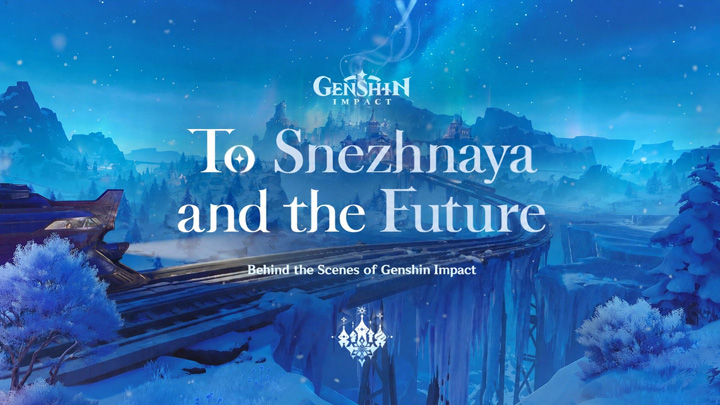
The Story Escalation: From Regional Conflict to Ideological Collapse
Narratively, Snezhnaya represents the convergence of Genshin Impact's longest-running mysteries. Recent official previews reinforce that the region will not simply expand the world, but recontextualize it.
At the center is the Tsaritsa, the Cryo Archon, whose role has evolved from distant ruler to ideological catalyst. While her exact motivations remain partially obscured, several key narrative directions are now clearly established:
Direct opposition to Celestia's divine order
Execution of the “Gnosis collection” strategy
Deep involvement in Khaenri'ah-linked history
A long-term plan that predates current Teyvat politics
What Snezhnaya appears to be building toward is not a regional conflict, but a structural revelation: the rules of Teyvat itself may not be as fixed as previously believed.
The Fatui as an Operating System of Power
If earlier regions treated factions as narrative actors, Snezhnaya reframes them as infrastructure. The Fatui are not just antagonists—they function as a distributed governance system embedded across Teyvat.
Their structure is increasingly specialized, almost corporate in design, with each Harbinger acting as a functional node in a larger machine.
Key Harbinger Roles (Updated Structure)
| Harbinger | Function | Narrative Role |
|---|---|---|
| Pierro | Strategic architect | Long-term planner tied to ancient Khaenri'ah |
| Il Dottore | Scientific development | Ethical boundary-breaking research systems |
| Columbina | Unknown anomaly | High-tier existential threat / unexplained power |
| Sandrone | Mechanical infrastructure | Automata networks and system control |
| Arlecchino | Social integration | Recruitment, orphan systems, covert influence |
This structure is important because it suggests the Fatui are not simply “villains with motives,” but a parallel institution operating at global scale—one that may rival even the Archons in systemic influence.
Gameplay Evolution: Snezhnaya as a System Upgrade
Perhaps the most surprising aspect of recent previews is not narrative at all, but gameplay design. Snezhnaya appears to introduce mechanics that extend beyond exploration and combat into world simulation.
Major gameplay directions revealed so far:
Cryo environment affecting traversal and stamina systems
Rail/transport mechanics for inter-zone movement
Expanded faction-based interaction systems
Industrial structures influencing enemy behavior and world events
More dynamic “state-controlled” world zones
These changes suggest Snezhnaya may function as a turning point for Genshin Impact's design philosophy—shifting from static open-world exploration to system-driven world interaction.
System Overview: What Snezhnaya Actually Adds
| Layer | Feature | Gameplay Impact |
|---|---|---|
| Environment | Permanent blizzard zones | Survival and traversal pressure |
| Infrastructure | Rail transport system | Faster, structured world navigation |
| Combat Ecology | Industrial + military zones | More dynamic enemy encounters |
| Faction System | Fatui territorial control | Region-based interaction variation |
| Elemental Design | Enhanced Cryo mechanics | Expanded environmental puzzle logic |
This table reveals a key design idea: Snezhnaya is not additive—it is structural.
Characters: A Society Built on Function, Not Just Identity
While Harbingers dominate the high-level narrative, recent previews also introduced a wider cast of Snezhnaya-native characters. Unlike earlier regions, these characters are less about individual heroism and more about systemic roles.
Examples include:
Danica – tied to transport and high-risk mobility operations
Alyosha – combat-oriented operative with beast-linked abilities
Vesna – enforcement or security structure presence
Odette – covert or assassination-aligned figure
Valeriy – heavy defensive or regulatory archetype
Vodyanitsa – cultural/performance-based influence role
Individually, they are fragments. Collectively, they suggest a society organized around function rather than narrative prominence.
With Snezhnaya positioned as a turning point for both story and gameplay systems, some players may even consider investing further into progression, including options to buy Genshin Impact Genesis Crystals, to prepare for draw powerful new characters.
Conclusion
Snezhnaya is no longer just the final icy region on the map. Based on recent HoYoverse materials, it is being positioned as a convergence point for everything Genshin Impact has built so far:
The ideological conflict between Celestia and mortals
The Fatui's global manipulation network
The unresolved legacy of Khaenri'ah
The mystery behind the Gnoses
And now, a redefinition of how the game itself plays
It is rare for an expansion to feel like both a story climax and a systems overhaul at the same time. But Snezhnaya appears to be attempting exactly that.
And if the previews are accurate, stepping into its frozen borders may not simply continue the journey. It may redefine it.









SUPPORT
LEGAL
Policies






 USD ($)
 English
  Help Center